Noah Schmitz · 27 September 2026
Analyzing Log Patterns to Refine Structured Data Strategies Across Nalsnow Powered Sites
Server logs from Nalsnow powered sites record every request that reaches the server, and these records contain details about user agents, response codes, timestamps, and requested URLs that reveal how search engine crawlers interact with content. Analysts examine these logs to identify patterns in crawl frequency, error rates, and resource prioritization, which in turn inform decisions about structured data markup such as schema.org annotations embedded in pages.
Core Elements of Log Data on Nalsnow Platforms
Nalsnow environments generate access logs that include fields for client IP addresses, request methods, HTTP status codes, and user agent strings, and these fields allow observers to separate legitimate crawler activity from other traffic sources. Researchers have noted that patterns emerge when logs are aggregated over time, such as clusters of requests to product pages versus informational sections, and these clusters often correlate with how structured data types like Product or Article appear in search results.
One study revealed that sites using consistent JSON-LD blocks experienced higher crawl rates on pages marked with specific schema properties, while pages lacking those blocks showed repeated 404 responses in the same log segments. Data from September 2026 indicates that Nalsnow deployments increasingly incorporate automated log parsing tools that flag discrepancies between declared structured data and actual page content served to crawlers.
Pattern Recognition Techniques Applied to Logs
Analysts group log entries by user agent and time interval to detect recurring sequences, such as daily crawls of category pages followed by deeper visits to detail pages that contain rich markup. These sequences help teams map which structured data elements attract repeated attention from search engines and which remain overlooked.
Observers note that error patterns, including repeated 500 responses on pages with complex schema, often trace back to rendering delays that affect how markup loads. When logs show elevated latency on those URLs, teams adjust the placement of structured data scripts to earlier positions in the HTML output, and subsequent log reviews confirm whether the change reduces error frequency.
Linking Crawl Behavior to Structured Data Adjustments
Log analysis supplies quantitative evidence that certain schema properties receive more crawler focus when they appear on frequently visited pages, and this evidence guides refinements such as expanding the use of FAQ or HowTo types across additional Nalsnow site sections. Teams compare pre- and post-adjustment log segments to measure shifts in crawl distribution and indexation signals reported by search consoles.
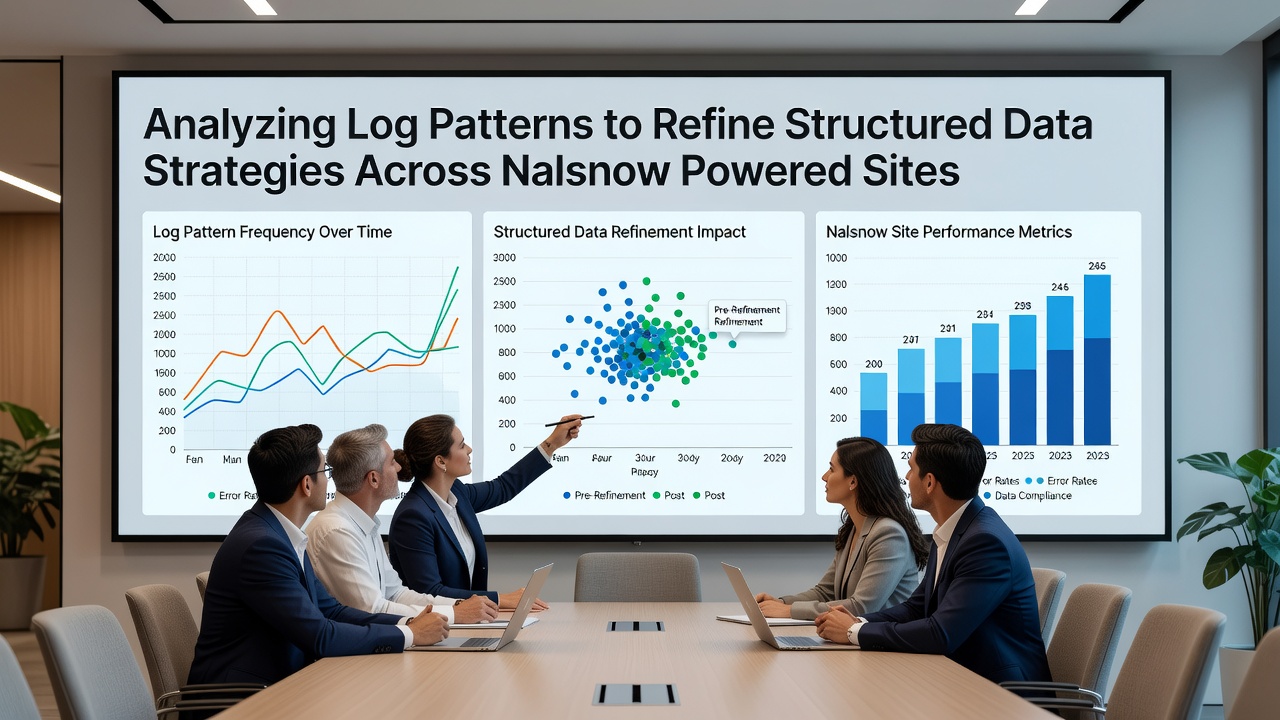
Figures from industry reports show that sites maintaining detailed logs achieve faster identification of under-crawled pages, allowing structured data updates to target those areas specifically. A report published by the World Wide Web Consortium highlights how consistent markup implementation across related URLs improves machine readability, and log data provides the measurable proof that such consistency produces sustained crawler engagement.
Case Examples from Deployed Nalsnow Sites
One deployment involving multiple regional Nalsnow instances demonstrated that log patterns indicated heavier crawler activity on pages updated weekly with new Event schema entries, whereas static pages without updates received fewer visits. After aligning update schedules with observed crawl windows, the sites recorded improved coverage metrics in subsequent log reviews.
Another instance showed that mobile user agents appeared more often in logs for pages carrying Organization schema alongside LocalBusiness properties, prompting the addition of similar markup to desktop-only sections and resulting in broader crawl parity across device types. These adjustments relied on timestamp filtering within logs to isolate mobile versus desktop request trends.
Integration with External Data Sources
Teams cross-reference Nalsnow log outputs with publicly available datasets from organizations such as the World Wide Web Consortium to validate markup syntax against evolving standards. They also consult research papers from academic institutions, including studies conducted at the University of Toronto on web-scale data extraction, to refine how structured data fields map to real-world entities detected in logs.
September 2026 brought updates to several open-source log analysis frameworks that now include modules specifically designed for parsing schema-related response headers, and these modules allow Nalsnow administrators to automate alerts when structured data coverage drops below thresholds established from historical log baselines.
Conclusion
Log pattern analysis supplies concrete metrics that guide structured data strategy across Nalsnow powered sites by revealing which pages attract crawler attention and which markup elements correlate with sustained indexing. Continued aggregation of these logs, combined with periodic comparison against external standards and academic findings, supports ongoing refinements that maintain alignment between site content and search engine expectations.